

News
New Perspectives in Cancer Research: Academician Chung-I Wu’s Lecture on Cancer Evolution and AI Modeling
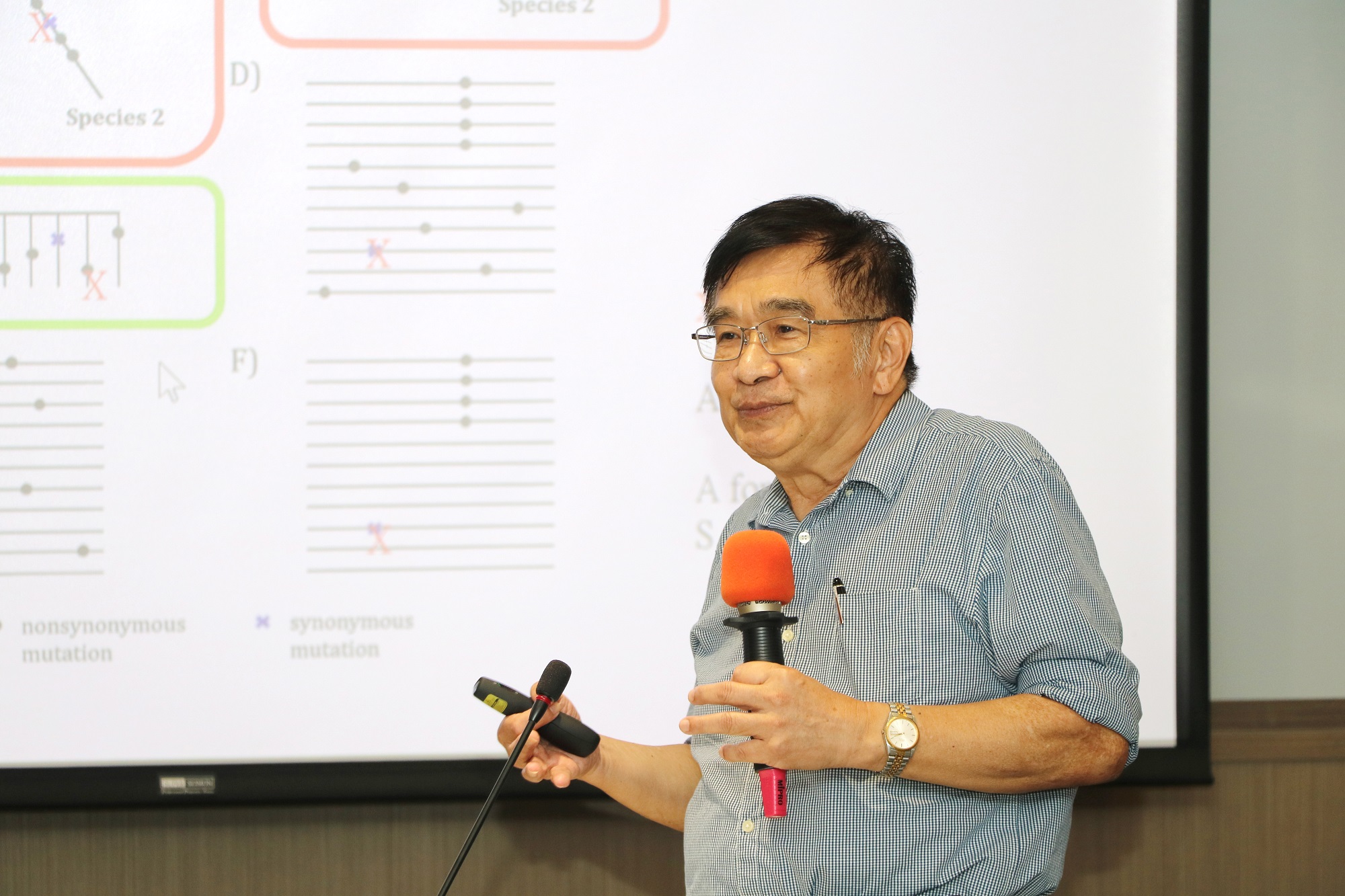
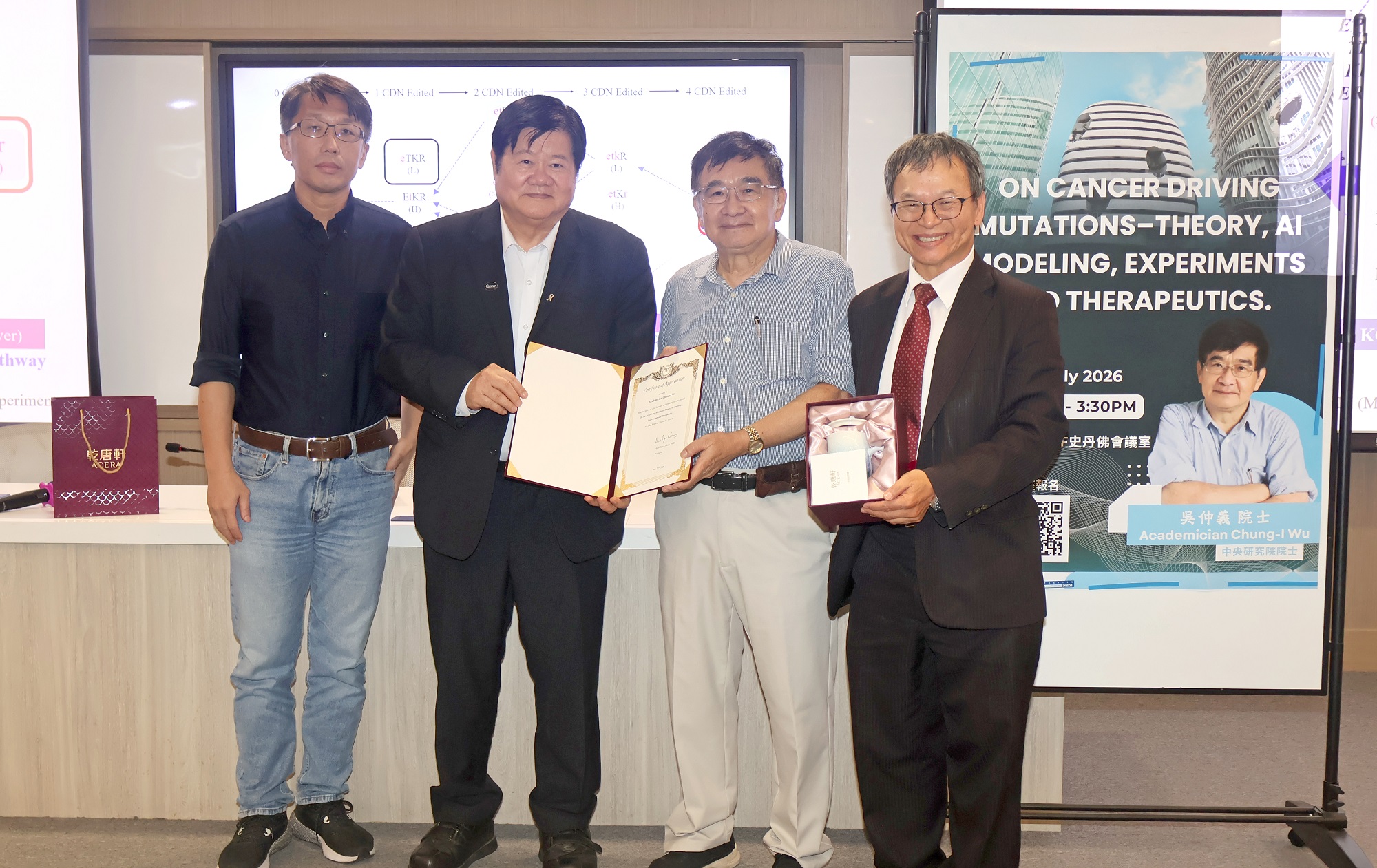
China Medical University hosted a special lecture on July 23, featuring leading evolutionary biologist Academician Chung-I Wu. In his talk, "Cancer Driving Mutations: Theory, AI Modeling, Experiments and Therapeutics," he shared recent advances in cancer genomics and explained how evolutionary biology and artificial intelligence can help improve cancer research and treatment.
Academician Wu introduced a different way of thinking about cancer—viewing it as an evolutionary process. Instead of treating cancer as a disease caused by a single gene, he explained that cancer develops through the interaction of many genes, allowing cells to gradually escape normal biological control and continue growing.
He also presented his team's latest work on cancer genomes. Rather than focusing only on cancer-driving genes, the researchers identified specific cancer-driving mutations that are more directly linked to tumor development. By analyzing large-scale cancer genome data, they found that many important mutations occur outside well-known cancer genes. This finding could improve precision medicine by helping doctors identify which patients are more likely to benefit from targeted therapies.
Discussing AI in biology, Academician Wu noted that although many deep learning models have been developed to predict gene function, their performance still has room for improvement. He argued that AI models should better incorporate biological knowledge, including how genes, RNA, and proteins interact, instead of relying only on DNA data. Combining biological principles with AI, he said, will make it easier to predict effective combinations of cancer treatments.
Looking ahead, Academician Wu highlighted Taiwan's strengths in genomic medicine. He proposed building a large-scale cancer genome database using exome sequencing together with Taiwan's comprehensive National Health Insurance data. Such a resource could support more personalized cancer treatment by identifying the best therapy for each patient's tumor.
He also shared experimental results showing that targeting a single mutation often has limited effects, while simultaneously targeting multiple key mutations can dramatically suppress tumor growth. He compared this strategy to a football team, where teamwork is far more effective than relying on a single player.
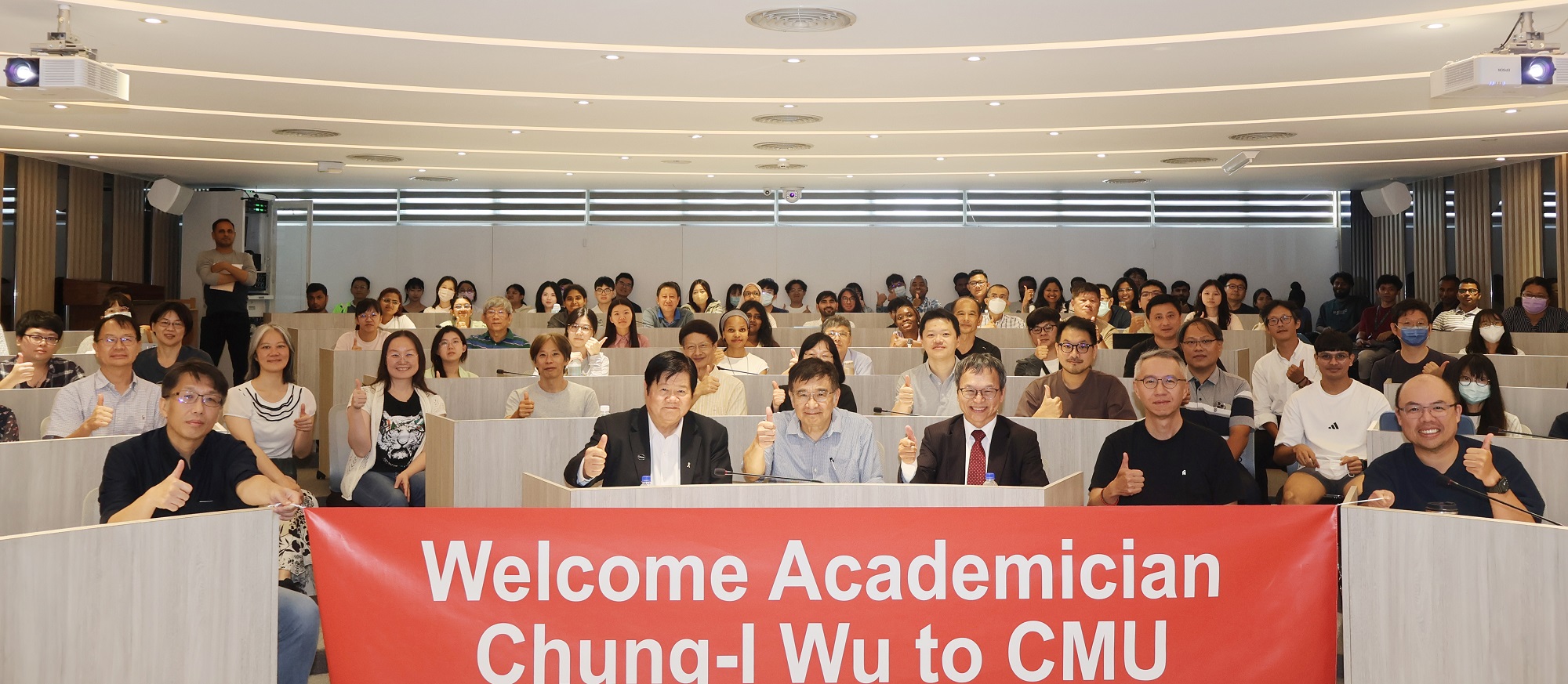
The lecture attracted more than 100 faculty members, researchers, and graduate students, providing an opportunity to explore new ideas at the intersection of cancer evolution, genomics, and AI-driven precision medicine.
【Photos】
|