


News
Strengthening International Academic Collaboration: The 7th NUS-CMU Joint Symposium Held at China Medical University
The 7th NUS-CMU Joint Symposium was held over two days on December 11 and 12 at China Medical University (CMU), bringing together 17 leading scholars from the National University of Singapore (NUS) and CMU. The event attracted more than 100 CMU faculty members and graduate students, fostering active discussions and generating new opportunities for collaborative research.
Academician Mien-Chie Hung, former President of CMU, highlighted the value of long-term collaboration between the two universities and the importance of translating scientific research into clinical impact. Dr. Dow Rhoon Koh, Director of International Relations at NUS Yong Loo Lin School of Medicine, praised the high academic standard of the symposium and expressed interest in expanding future research collaboration.
The symposium featured a series of invited talks and research discussion sessions covering cancer biology, precision medicine, innovative therapies, and healthy aging. Through in-depth dialogue on shared research interests, participants explored several promising directions for future collaborative projects.
In addition to the program, Dean Liang-Yo Yang of the Office of Global Affairs arranged a campus visit for the NUS delegation to several key research facilities at CMU, including the English laboratories at Excellence Building, the Kyoto University-CMU Lab, and the Center of Excellence for Cancer Biology and Precision Therapeutics. During the visit, the delegation learned about ongoing research initiatives and observed the laboratories and research programs in action.
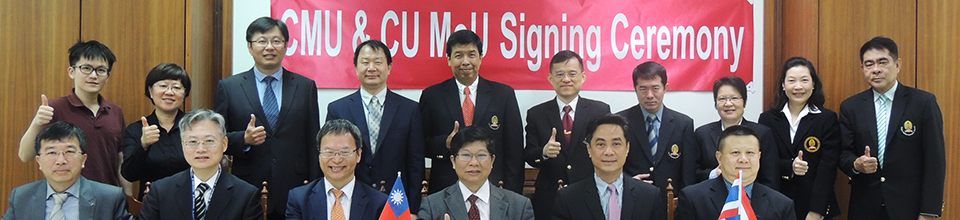
The National University of Singapore (NUS) is one of the world’s leading universities. Since signing an MOU in 2016, the two universities have maintained close academic exchanges with productive outcomes. The joint symposium series, launched in 2017 and hosted alternately by the two institutions, has continued without interruption, including during the COVID-19 pandemic through online formats. These sustained exchanges have strengthened research ties, highlighted both universities’ strengths in biomedical research, and laid a solid foundation for deeper collaboration in the future.
【Photos】
|


